
By David Tian, Ph.D.
Certified IFS Therapy Practitioner (Level 3). Ph.D., University of Michigan, specializing in moral psychology. Former tenure-track professor of philosophy, National University of Singapore. Brown University Certified Leadership Coach. Private adviser to founders and high achievers.
Key Takeaways
- Success cannot heal a childhood emotional wound, because the wound was never about achievement. It formed in the absence of attuned connection and responds only to its presence.
- A child measures love by how well he is known, not by how much he is provided. Material provision and emotional presence are different things, and a child needs the second more.
- Decades of research — Bowlby and Ainsworth on attachment, Harlow on contact comfort, the Romanian orphanage data — converge on one finding: responsive connection builds the developing brain, and emotional absence distorts it.
- Wounds form without anyone intending harm when a child interprets a painful event as evidence about his own worth, and no adult is available to correct the interpretation.
- You cannot outwork a wound, out-earn an abandonment, or out-achieve the need for love. The wound is met, not outperformed — through reparenting, supplied first by a trained practitioner and then by the core of you IFS calls the Self.
- Legacy is not what you provide for the people you love. It is how you were with them.
Success cannot heal an emotional wound from childhood because the wound was never about achievement, and achievement was never the missing thing. The wound formed in the absence of warm, responsive connection, and the only thing that repairs it is the warm, responsive connection that was needed back then — first from another person trained to provide it, and then by the steady, wise core of you that Internal Family Systems calls the True Self.
This is from the Emotional Mastery series.
A client of mine — I will call him Michael — lost his father in an accident when he was seven. His father, who had grown up with nothing, had prepared a trust fund large enough to cover every material need Michael would ever have. By every measure his father took care of him.
Decades later, as a man with his own wealth, his own status, and accomplishments his father never lived to see, Michael said something I have not forgotten. He said he would pay all of it back, every cent with interest, for one more day with his dad.
No amount of provision had replaced the one thing he needed, which was his father’s presence. And his situation is not unusual. It is the situation of a particular kind of high achiever — the one who grew up with provision but without connection, and carried the gap into adult life without knowing that was what he was carrying.
Why doesn’t success make me feel better about myself?
Because the feeling you are trying to fix did not come from a lack of success, and success is the wrong tool for the job. The feeling of not being enough usually forms early, in a childhood where love seemed to depend on something — on performance, on being easy, on not needing too much. The child concludes that he has to earn his place. The adult keeps earning it, through achievement, long after the people whose love he was trying to win are gone or have changed. Each achievement settles the feeling for a few days, then the feeling returns, because the achievement is answering a question the feeling never asked.
In many high-performing families, the word “responsibility” comes to mean material support. Food, tuition, housing, an inheritance. All of it matters. But none of it is sufficient.
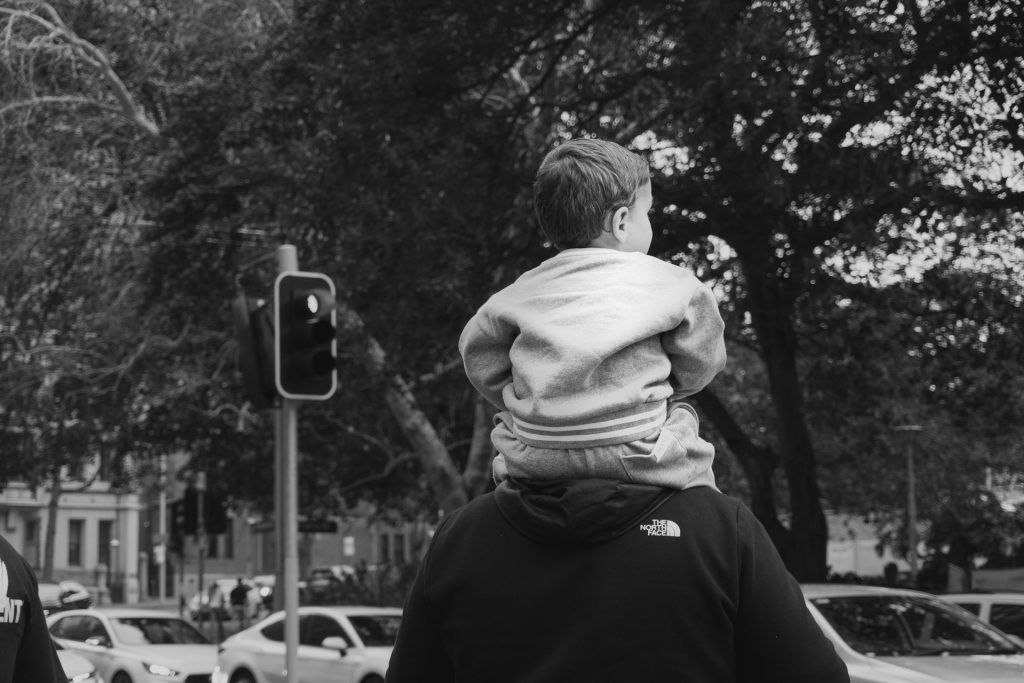
A child does not measure love by how much he is given. He measures it by how well he is seen, heard, understood — by the warmth in a parent’s eyes, by shared laughter, by whether someone sees his fear and stays in the room with it instead of looking away.
When that is missing, even when no one intended it to be missing, the child grows into an adult who is still trying to earn the love he never trusted was unconditional. Achievement becomes the strategy. Productivity becomes the shield. Success becomes the thing he does instead of the thing he needed.
What does the research say about childhood emotional needs?
Decades of research converge on a single finding: warm, responsive connection in early childhood builds the developing brain, and emotional absence distorts it. The work spans most of the twentieth century and continues now, and the conclusion has held across every method used to test it.
John Bowlby, a British psychiatrist working in the mid-twentieth century, established attachment theory — the claim that a child’s bond with a responsive caregiver is not a luxury layered on top of survival but a biological need as basic as food. Mary Ainsworth, who worked with Bowlby, developed a way to measure it. In her Strange Situation experiments, she watched how young children responded when a caregiver left the room and returned. The children who had received consistent, attuned care explored confidently, showed distress at separation, and settled quickly on reunion. The children who had not received it showed patterns that already, in toddlerhood, looked like the adult patterns of anxiety and avoidance.
Harry Harlow’s experiments with infant rhesus monkeys made the point starkly. The infants were given a choice between a wire mother that dispensed milk and a soft cloth mother that gave no food. The infants clung to the cloth mother and went to the wire mother only to feed. Comfort, not calories, was what they sought. Deprived of both, they grew into adults unable to function socially.
The Romanian orphanages of the Ceaușescu era produced the most painful confirmation. Thousands of infants were institutionalized with their physical needs met — fed, clothed, kept warm — but with almost no personal attention. They developed severe cognitive and emotional deficits. The Bucharest Early Intervention Project later showed that children moved into responsive foster care recovered measurably, but the earlier the move, the fuller the recovery. Provision alone had not been enough. Attention was the active ingredient.
Modern developmental neuroscience describes the mechanism in terms of what researchers call “serve and return” — the back-and-forth of a baby’s expression and a caregiver’s response, repeated thousands of times, which builds the neural connections underlying confidence, emotional regulation, and the sense of belonging. The child who gets the responses builds the architecture. The child who does not ends up building something else: hypervigilance, perfectionism, or the steady background feeling of not being enough, no matter what he later achieves.
Emotional presence is not sentimentality. For a developing child, it is closer to nutrition.
How do emotional wounds form when no one meant any harm?
They form when a child interprets a painful event as evidence about his own worth, and no adult is available to correct the interpretation. The child’s mind is not yet able to hold complexity, so it builds the simplest explanation it can survive on, and that explanation is usually some version of “this happened because something is wrong with me.”
Michael’s father did not choose to leave him. But a seven-year-old cannot understand death. The mind of a seven-year-old reaches for an explanation it can live inside, and the explanation it reached for was the one most children reach for: I did something wrong. I was not enough to keep my father here.
So the trust fund, which his father had built as an act of love, became tied in Michael’s mind to shame and resentment. The money said you are provided for. It did not say you are loved, because the person who would have said that was gone, and the child had already concluded the absence was his fault.
This is how wounds form without anyone intending harm. A child confuses tragedy with rejection. He confuses a parent’s exhaustion with disinterest. He confuses being provided for with being kept at a distance. The interpretation sets, and the adult that child becomes spends years outrunning an echo he can no longer hear clearly enough to argue with.
Can you heal childhood wounds through achievement?
No. You cannot outwork a wound, out-earn an abandonment, or out-achieve the need for love. The wound responds only to the thing it was made of, which is attuned connection. Achievement can distract from the wound for a long time, which is why it is the strategy so many high performers choose. But distraction is not repair, and the moment the achievement stops — after an exit, after the children leave, after the career plateaus — the wound is still there, exactly as it was, now with the years spent avoiding it added on.
There is a counterintuitive finding in the research worth sitting with. If the absence of love can damage a child raised in comfort, the presence of love can protect a child raised in hardship. Parents in war zones, in famine, in poverty have raised grounded, resilient adults, because they gave the one thing that builds resilience: attunement. The child of attentive parents in a refugee camp can be better equipped for life than the child of absent parents in a mansion.
For the adult carrying the wound, this points at the only thing that works. You cannot perform your way out of an unmet need. You have to meet the need. For an adult, that means giving yourself the patience, the warmth, and the acceptance you spent decades trying to earn from other people. The clinical word for this is “reparenting,” and it is not a metaphor. It is the practice of bringing an adult’s steady attention to the part of you that was left alone with an interpretation it could not handle, and staying in the room with that part the way no one else back then stayed with you.
What does healing actually look like?
For a parent, it looks like choosing presence over provision — time over the next gift, attention over the next achievement on the child’s behalf. For an adult carrying a childhood wound, it looks like turning toward the part of yourself you have been outrunning, and giving it what it needed the first time. Neither is fast. Both are specific, and both are possible.
The parenting side is the simpler of the two to state, though not to do. The research is clear that a child needs the parent’s attention more than the parent’s resources, and that no amount of the second substitutes for the first. A father who provides everything and is never present has not, from the child’s point of view, been there. The child will not remember the size of the trust fund. He will remember whether he was seen, heard and held.
The adult side is harder, because the part of you that needs the attention is the part you trained yourself to ignore. It rarely speaks loudly. It shows up as a flatness after a win that should have meant something, as a dread before a date you cannot explain, as a loneliness that does not lift in good company. Most people in this position have learned to treat these as malfunctions and to manage them with more work. The work of healing runs the other direction. It turns toward the part instead of away from it.
This usually requires another person, at least at first, because the same reflex that buried the wound will arrive to bury it again the moment it begins to surface. A practitioner trained in parts work — Internal Family Systems is the most developed version — can keep that reflex from taking over long enough for the buried part to be heard. Once it has been heard, by you, with the steadiness an adult can bring and a seven-year-old could not, the thing the wound has been demanding for thirty years finally arrives.
What does legacy actually mean?
Legacy is not what you provide for the people you love. It is how you were with them. The provision is forgotten or taken for granted. The presence, or its absence, is what they carry.
By the end of our work together, Michael understood something about his father he had not been able to reach before. His father’s gift had never really been the money. The gift was the intention inside it — a man who had grown up with nothing, determined that his son would never go without. Once Michael could receive that intention as what it was, unconditional love rather than a transaction he had failed to earn, the interpretation he had carried since he was seven finally loosened. He had not been abandoned. He had been loved by a man who ran out of time.
That understanding is the work. It did not come from any of Michael’s achievements, and it could not have. It came from meeting the part of himself that had been waiting since the day his father died.
The question worth asking, for anyone with people who depend on them, is the one Michael’s life answers from the other side. His father is remembered now for his presence and for the seven years of it, not for the trust fund. The provision was real and it mattered. But it is not the thing Michael would trade it all to get back.
Frequently Asked Questions
Why doesn’t success make me feel better about myself?
Because the feeling you are trying to fix did not come from a lack of success. The feeling of not being enough usually forms in childhood, where love seemed to depend on performance or on not needing too much. The child concludes he has to earn his place, and the adult keeps earning it through achievement long after the original audience is gone. Each achievement settles the feeling for a few days, then it returns, because achievement answers a question the feeling never asked.
Can you heal childhood trauma by becoming successful?
No. You cannot outwork a wound, out-earn an abandonment, or out-achieve the need for love. Achievement distracts from the wound, sometimes for decades, which is why so many high performers choose it. But distraction is not repair. When the achievement stops — after an exit, after the career plateaus — the wound is still there, with the years spent avoiding it added on.
What did Harlow’s monkey experiments show about love?
Harry Harlow gave infant rhesus monkeys a choice between a wire mother that dispensed milk and a soft cloth mother that gave no food. The infants clung to the cloth mother for comfort and went to the wire mother only to feed. The experiments showed that contact comfort, not the provision of food, was what the infants sought, and that infants deprived of it grew into adults unable to function socially. Comfort was the need. Calories were secondary.
Why do I feel empty even though I had everything growing up?
Because material provision and emotional presence are different things, and a child needs the second more than the first. A child can grow up with every resource and still conclude that he was not known — that no one saw his fear, shared his joy, or stayed in the room with his difficult emotions. That conclusion produces an adult who feels empty in the middle of plenty, because the plenty was never the missing thing.
What is reparenting?
Reparenting is the practice of giving yourself, as an adult, the attuned attention you needed and did not receive as a child. It means bringing steady adult attention to the part of you that was left alone with a painful interpretation it could not handle, and staying with that part the way no one stayed with you back then. It is the active ingredient in healing a childhood wound, because the wound formed in the absence of attuned connection and responds only to its presence.
Can therapy help if my childhood looked fine from the outside?
Yes, and a childhood that looked fine from the outside is one of the most common backgrounds for this kind of wound. Provision, achievement, and the absence of obvious abuse can all coexist with a child who concluded he was not known. A practitioner trained in parts work, such as Internal Family Systems, can help reach the part of you carrying the original interpretation, which the reflex to stay productive will otherwise keep buried.
What is the most important thing a parent can give a child?
Attention. The research across attachment theory, contact-comfort studies, and the institutional-deprivation data converges on the same finding: a child needs responsive, attuned presence more than any material provision, and no amount of the second substitutes for the first. The child will not remember the size of the gift. He will remember whether he was seen, heard, and understood.
If this message resonates, listen to the full episode on the Beyond Success Podcast:
🎧 Episode 63 – Why Success Can’t Heal Emotional Wounds (& What Actually Does)
0 Comments