We usually try to solve the problem we can see. But when the same kind of problem keeps coming back, the visible problem may only be the clue. Sometimes you need to look further upstream to understand what’s really causing it.


We usually try to solve the problem we can see. But when the same kind of problem keeps coming back, the visible problem may only be the clue. Sometimes you need to look further upstream to understand what’s really causing it.

There’s a version of you who was supposed to have arrived by now. He isn’t coming. The grief you keep dodging is the way back to your real life.

You say nobody cares about being good, and you say it like someone who earned the line. But you didn’t reason your way there. You backed into it, because the other way hurt more. A look at the wall cynicism builds, what it keeps out, and what it costs you.

The founder is forty-three, single, and has not been alone with himself for fifteen years. The exit closed seven months ago. The number was good. But the feeling on the other side has been a low background hum of dread he cannot trace to anything specific, because nothing specific is wrong. What he cannot do, and has not been able to do since he was young, is sit in a room with no outward goals and be ok with himself. The Daoist tradition, Aristotle, and Seneca all reached the same conclusion from different starting points more than two thousand years ago. The capacity he never built is precisely the activity in which a life worth living gets built.

You have been with your partner for years. The two of you are starting to think about a wedding, or your families are, or you are wondering whether you need one at all. The pressure of the day already feels out of proportion to anything else in your life together. A hundred thousand dollars, a guest list, a venue, a date. Before you decide whether marriage is worth it, you should know that almost everyone considering it is confusing two completely different things. Until you see the difference, the question of whether to marry will keep feeling impossible. Once you do see it, the pressure of that day dissipates, and the answer becomes clear.

Most successful people in midlife look at marriage as a financial risk, and they are half right. The wrong spouse can cost you decades of your peace and half of what you built. The mistake is to blame marriage. The Harvard Study of Adult Development, the longest study of adult life ever conducted, found that married men lived seven to seventeen years longer than unmarried ones. But the same research shows that men in unhappy marriages carry a twenty-one percent higher risk of dying from any cause than men in happy ones. A good marriage adds years. A bad one takes them. The question is not whether to marry. It is whether you have found the partner whose partnership in your life over the next decades would give you back at least double what you brought to them.

Most people, trying to decide whether to get serious with someone, ask whether their partner is the right person. The question feels like the important one. It is also the wrong one, or at least the secondary one. The primary one is about the person doing the asking. The qualities in your partner that first drew you in are usually the same qualities you eventually try to suppress in them, because they’re the same qualities you suppressed in yourself a long time ago. The variable in your dating life has never been the partner. This essay is about what it has been.

When successful people sit down to write what they want in a partner, they usually produce something closer to a job description than a portrait of someone to live with. The list reads like a spec because that is what it is, and the spec is doing a job for the writer rather than describing an actual person. The job is settling an old question about whether you are enough. No partner can settle that question. This essay is about what to do instead.

The drive you used to have was running on a fuel source that gets depleted by the wins it produces. By your forties, the tank is empty, and pushing harder is the thing accelerating the loss. This is not burnout, not midlife, not lost hunger. Instead, it is a design flaw in the engine that got you here.

The playbook that got you to this altitude has stopped producing. The standard remedy — point it at a bigger target — costs more than it produces now. This is not an argument for a quieter life or a different mountain. It is an argument that the next decade can dwarf the last one, and that the constraint is somewhere you have not been looking.

After a decade or more of hard work, most successful people start to notice that something has gone quiet in them. The work still gets done. The numbers still go up. But the curiosity, the play, the taste that used to feel automatic — none of it is reachable the way it used to be. This essay is about what actually happened to those qualities, why they are not gone, and how the figures whose later work is more interesting than their earlier work got them back.

You won. But it didn’t feel the way you thought it would. The numbers that used to keep you up at night have stopped doing that. And yet you cannot rest, you cannot stop competing, and when you win, what arrives first is relief — not joy. This essay is about the question that arrives sometime after the win, and what the people who hold up over decades have done with it.

The phrase “emotional mastery” hides an assumption.
Mastery requires a master. When you set out to master your emotions, you commit yourself to a picture of two selves living inside one person — the self who governs and the self who is governed.
For twenty years, the arrangement worked. It built the career and the money. It did not build the partner who was supposed to be there by now, or the children who would have followed.
A new essay on what emotional mastery actually is, and why the forties are when most people first notice the cost of the version they have been practicing.

What if the hollow after the exit was always going to happen — not a personal failure but a model failing right on schedule? Aristotle’s word for what this smart, driven person was actually after — eudaimonia, the activity of a life lived well, seen as a whole — names the diagnosis the post-exit founder did not know he needed. He has been pursuing, with extraordinary discipline, the wrong target.
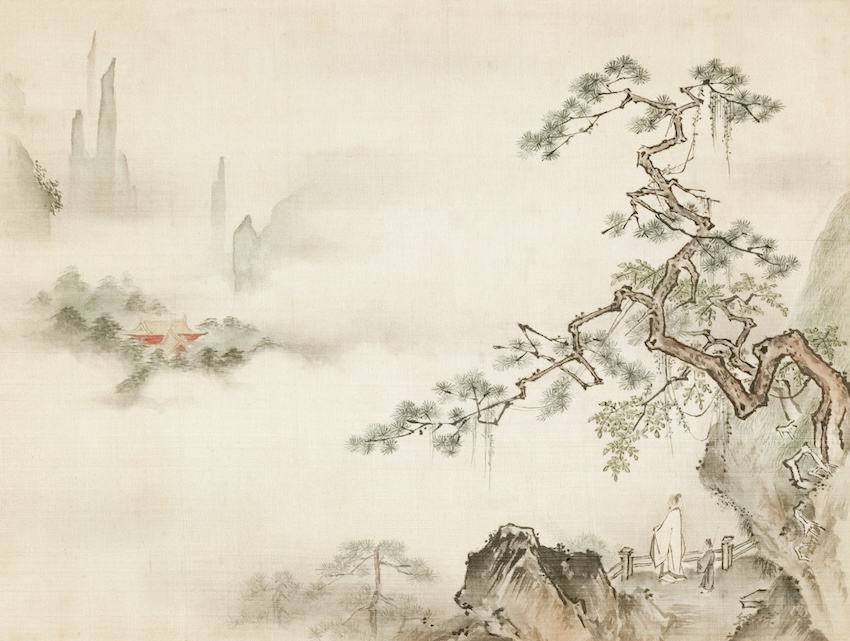
What if the strength that built the company is the obstacle to the next phase of life? The ancient Chinese philosophers had a name for the state most worth wanting — wu wei, effortless action — and noticed it can’t be reached by harder effort. Mencius saw the problem twenty-three centuries ago. Wang Yangming, sixteen hundred years later, identified the reason most of us are stuck even after we see it.

A philosophical look at the disorientation that follows an IPO, an exit, or financial freedom — and what it’s actually asking of you.
The sadness, flatness, or unease that follows a successful exit is common, predictable, and almost always misdiagnosed. It is not depression. It is not burnout. It is not ingratitude, and no amount of journaling about gratitude will resolve it. It is what happens when a question that organized your life for a decade finally gets answered. This essay reveals what it actually is, explains why three common responses make it worse, and points at the harder question hiding inside the discomfort.
When success fails emotionally, the usual response is to chase it harder. That reaction feels disciplined, even responsible. It is also often a way of avoiding a harder truth about what success can and cannot do. This essay examines why frustration and lack of gratitude show up precisely when things are going well, and why treating that experience as a moral flaw misses the real issue. The case here is that objective truth matters less as an abstract value and more as a practical necessity once success stops delivering what it promised.

The phrase “everyone has their own truth” is often offered as a gesture of tolerance. It sounds like a way of respecting difference while avoiding dogmatism. For people who have seen rigid certainty do harm, that impulse can feel earned.
But what happens to judgment when truth no longer refers to how things actually are, and instead comes to mean what fits our preferences or identities. What happens to responsibility, correction, and moral reasoning when reality itself loses its authority to push back.
This essay explores why relativism feels humane at first, why it breaks down under pressure, and why a shared commitment to truth is not a threat to freedom, but a condition for meaningful choice.

A client lost his father in an accident when he was seven. His father had left a trust fund large enough to cover every material need he would ever have. Decades later, with his own wealth and status, the client said he would pay all of it back for one more day with his dad. Success cannot heal a childhood emotional wound, because the wound was never about achievement. It formed in the absence of attuned connection and responds only to its presence. This essay traces what the research on attachment actually shows, how these wounds form when no one intends harm, and what repairs them.

When corruption looks efficient and cruelty gets rewarded, despair feels logical. But psychology and history reveal a deeper pattern: most “evil” is unhealed pain masquerading as power. This piece breaks down why good people get burned, why wounded protectors become persecutors, and how to stay strong without losing compassion. Heart open. Eyes sharp.